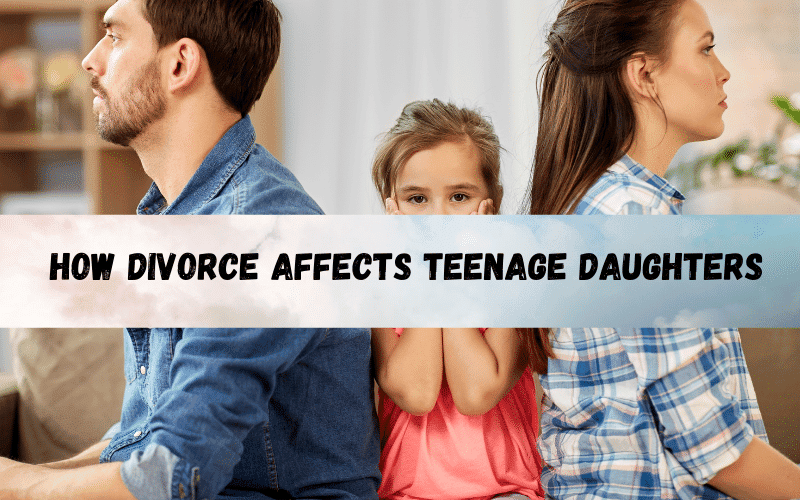
Divorce is undeniably difficult for everyone involved. It isn’t something you usually expect. Regardless of your feelings during this process, your child’s needs are crucial. Their welfare must be one of your top priorities, no matter how challenging the situation may be.Divorce is a traumatic experience for everyone involved, but it has a notably negative impact on teenage girls. Some parents who decide to divorce prioritize their self-interest over the interests of their children. As a result, these teenagers sometimes have to become more self-reliant and tackle life’s challenges without parental supervision and guidance. To avoid this kind of stressful situation, your involvement in your child’s growth is essential.Learn about our teen mental health treatment
- Teenage girls may face emotional and behavioral issues after divorce, including a higher risk of mental illness, suicide attempts, and substance addiction.
- Divorce can disrupt a teen's development, but teens are less likely than younger children to blame themselves for the separation.
- Adolescents from divorced families may have more conflict with parents, use drugs and alcohol, and see a drop in their school grades.
- Parents can help by providing a loving environment, talking openly with their teen, and seeking professional help like therapy if needed.
Divorce Statistics in the United States
Divorce has been rising in the United States. Between 1960 and 1980, the divorce rate in the United States doubled and almost tripled in states like Arkansas, Oklahoma, and Nevada. More than 45% of marriages result in divorce, and over 40% of children in America experience parental divorce. More than a million children under 18 have been affected by their parents’ divorce nowadays. On average, marriage lasts for at least 6.6 years before a divorce.
While divorce is common nowadays, it is crucial to remember that the vast majority of divorced couples remarry. Around 50% of men and 45% of women tend to remarry within five years following their divorce. Second marriages have been demonstrated to survive shorter than first marriages, implying that a teenager is likely to go through more family changes before reaching adulthood.
The Implications of Divorce on Children’s Emotions
Parental divorcing frequently is a formative and transformative experience for adolescents. Family life forever changes due to divorce. Children get upset, but they eventually adapt, heal, and move on with their lives. However, research shows that trauma that occurs before children reach preschool age might leave a lasting impression.
Divorce produces a disruption at a crucial stage of teenage development. Children who grow up in single-parent families are more than twice as likely to acquire a significant mental disease, attempt suicide, or have an alcohol or substance addiction, according to a recent survey of over 1 million children in the United States. These children are also twice as likely to experience emotional and behavioural issues and tend to have a strained connection with one or both of their parents.Even when remarriage does not occur, 40% of American children are projected to spend time with cohabiting parents. A new family addition might be a source of conflict. Teenagers have a more challenging time accepting step-parents than younger children. While the latter may benefit from living with step-parents, teens tend to find that living with a new adult is more stressful.Children might get depressed and worried since they do not know what will happen next. However, teenagers are more likely to grasp the core issues that might lead to divorce, and may even perceive it as comfort. They are also less likely to blame themselves. In addition, separation increases children’s reliance on their parents while also catalyzing teenagers’ autonomy. Furthermore, when parents work cooperatively, the devastating impacts of separation on teenage girls decrease significantly. Most teenagers and their parents cope with divorce and eventually see it as a positive or necessary change.
What Can You Do to Lessen the Negative Repercussions of Divorce
Teenagers from divorced households have increased behavioural issues, experience more conflict with their parents, use more drugs and alcohol and have worse mental health issues. Children of divorce also perform worse academically, leading them to a drop in their school grades.This negative influence can be mitigated by paying close attention to how your child reacts and being sympathetic. When divorce happens, it is not rare for the child’s future to become unstable or for one parent to simply disappear from the child’s life. As such, make sure to provide your kid with a loving, comfortable, and nurturing environment in which they are introduced to new people in emotionally healthy ways.
Additionally, talk openly with your teenager about their feelings and actively listen to what they say. Ask if they want to speak with a professional, such as a therapist, if they are not comfortable discussing their feelings with you. Make sure you have the resources in place to assist them in adjusting to their new situation. You might want to inform their teachers about the change so they can understand the changes in their behaviour and performance in school.
Note that your teen is likely to spend more time with their peers and do things that divert their attention from the stresses caused by divorce. This may include the use of substances like marijuana and cocaine to ease the grief they are experiencing. Since they are particularly susceptible to developing an addiction during this stage, you may have to consult teen drug rehab, adolescent mental health residential treatment centers, or adolescent residential treatment centers for depression to protect your teen’s well-being.
Contact us today for a free and confidential consultation. Schedule a call that is convenient for you.
Request a Call
Is your teen struggling with mental health or substance use challenges?
Request a confidential call today – our team will walk you through the admissions process, treatment options, costs, and what to expect. Reaching out is a powerful first step toward a healthier future for your teen and your family.
"*" indicates required fields
Author

Ryan, Blivas
Ryan Blivas is a behavioral healthcare entrepreneur and teen mental health advocate dedicated to combating the mental health crisis in America. As the Co-Founder of Key Healthcare, he oversees a comprehensive network of care, including a residential treatment center in Malibu and outpatient clinics in West Los Angeles, all designed to support teens struggling with mental health and substance use disorders. A contributor to Entrepreneur Magazine, Ryan combines business acumen with a deep commitment to advocacy, driven by a mission to help families in despair find hope and lasting recovery.
Medically reviewed by

Elnaz Mayeh PhD, LMFT
As Executive Director, Dr. Mayeh is dedicated to maintaining Key Healthcare’s reputation as a premier adolescent treatment center, fostering a stable and supportive environment for both clients and staff. Her leadership focuses on clinical integrity, staff development, and creating a culture of compassion and growth.