
Physical and experiential therapies play a meaningful role in adolescent recovery. Surf therapy encourages healthy routines, stress regulation, and self-esteem through structured activity paired with clinical guidance, supporting healing in and out of the treatment setting.

What Is Surf Therapy?
Surf therapy is a therapeutic approach that uses surfing sessions in a natural environment, typically the ocean, to support mental well-being, emotional regulation, and social connection. Surf therapy programs are often informed by research and models developed by organizations such as the International Surf Therapy Organization, which has explored how surf programs can promote psychological and emotional health across many populations, from adolescents to adults.

At Key Healthcare, surf therapy is not a replacement for clinical treatment. Instead, it complements traditional talk therapy by incorporating movement, nature, and experiential learning into the healing process. Our clinical team includes master’s and doctoral level therapists who help ensure every session supports each teen’s individualized treatment goals.
Surf Therapy Programs and Adolescent Mental Health
Surf therapy programs have been studied across a wide range of groups, including at-risk youth, foster youth, adolescents experiencing homelessness, adults with mental health conditions, and active duty military/veterans experiencing post-traumatic stress disorder. Research and qualitative analysis suggest that surf therapy may support emotional regulation, stress reduction, and social connection for some people with mental health conditions.
For adolescents, surf therapy may be especially helpful as part of a broader treatment plan because it can:
- Encourages active engagement
- Supports stress reduction through physical activity
- Supports emotional resilience in a non-clinical setting
- Helps teens build confidence and self-efficacy through learning a new skill
By combining exercise, nature, and therapeutic elements, surf therapy supports both psychological outcomes and physical health. It is particularly well-suited for at-promise youth, survivors of trauma, and teens who have struggled to connect with more traditional therapeutic formats.
How Surf Therapy Works
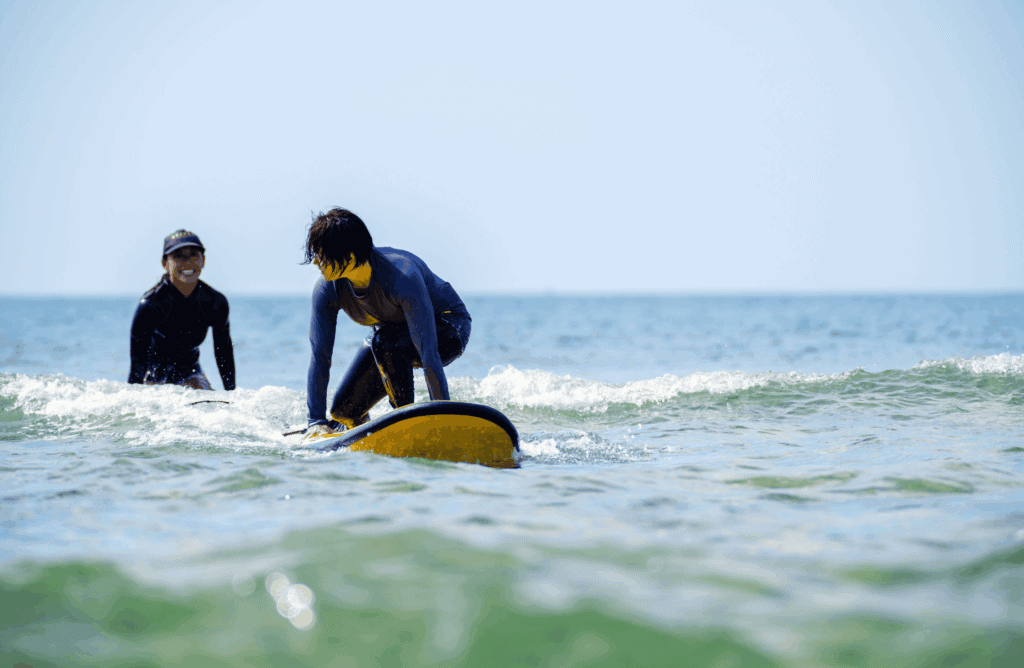
Surf therapy sessions are structured and supervised to ensure safety, accessibility, and therapeutic value. Each surf rehabilitation session typically takes place at the beach and includes personalized surf instruction, along with support from clinical staff. Teens are provided with all necessary equipment, including soft top surfboards and wetsuits, so no prior experience or gear is needed.
Sessions may include:
- Personalized surf instruction covering basic surfing and water safety skills
- Guided surfing in small group settings
- Breathwork and grounding techniques to support regulation before and after sessions
- Reflection and discussion facilitated by clinical staff or a social worker
- Team-based activities that promote social skills and cooperation
Teens are supported at every level, regardless of swimming or surfing experience. A pre-session phone consultation is available to help families understand what to expect and ensure the program is a good fit for their teen.
Programs are customized to each participant’s abilities and comfort level. Customized treatment plans are developed in collaboration with the clinical team, ensuring surf therapy sessions align with each teen’s broader mental health and recovery goals.
The Role of the Surf Instructor and Support Team
The surf instructor plays a key role in teaching technique, safety, and confidence in the water. In collaboration with therapists, doctors, and mental health professionals, instructors help ensure sessions remain supportive and focused on well-being rather than performance. Key Healthcare is Joint Commission accredited, and our clinical staff includes master’s and doctoral level therapists who work alongside surf instructors throughout every session.
Our clinical staff support teens emotionally throughout each session, helping them process experiences and connect lessons from the ocean back to daily life and treatment goals. This coaching-informed approach reinforces skill-building and self-efficacy while helping teens practice coping skills they can use outside of sessions.
Surf Therapy California: Ride the Waves Toward Healing
Teen surfer therapy offers a powerful, nature-based approach to emotional growth and recovery. If your teen is struggling with mental health challenges, our surf therapy program can help them build confidence, reduce stress, and connect with themselves in a supportive, ocean-centered environment. Contact us today to learn more or get started.
Therapeutic Benefits of Surf Therapy
Surf therapy offers a range of therapeutic benefits that support recovery and both physical and mental health, extending well beyond the time spent in the water. By combining physical activity, structured support, and the natural environment, surf therapy helps teens engage in healing in a way that feels active, grounding, and meaningful.
Mental and Emotional Well Being
Spending time in nature while engaging in surfing sessions can help reduce symptoms of anxiety, depression, and emotional overwhelm. The ocean environment, combined with movement and focused activity, supports emotional regulation, stress relief, and overall mental well-being. Ocean mindfulness practices and body-based grounding exercises are woven into sessions to help teens stay present and feel more regulated.
Physical Activity and Sleep Quality
Surfing is a full-body form of exercise that activates multiple muscle groups and other physiological processes. This physical engagement supports overall physical health and can contribute to improved sleep quality, which is often disrupted in teens experiencing mental health conditions or high stress levels.
Self-Esteem and Confidence
Learning to surf and successfully navigating waves builds self-esteem and self-efficacy through mastery of a new skill. Progress happens gradually, reinforcing a sense of capability, resilience, and accomplishment within a supportive therapeutic setting rather than a performance-driven environment.
Social Skills and Community Connection
Group surf therapy sessions encourage social bonding, teamwork, and cooperation. Teens have opportunities to connect with peers, build friendships, and practice social skills in a natural, shared experience. This sense of community supports social integration and helps reduce feelings of isolation, particularly for at-promise youth, foster youth, and teens who have faced significant barriers to connection.
Mindfulness, Focus, and Presence
Surfing requires attention to the body, the ocean, and the present moment. Ocean mindfulness practices and grounding techniques used during sessions help teens step away from rumination and persistent stress, promoting mindfulness therapy and emotional awareness. Breathwork before and after sessions deepens this benefit, helping teens build a toolkit of somatic regulation skills they can carry into daily life.
Our goal in developing Key Healthcare was to create adolescent mental health treatment programs that gave teens the guidance they needed to draw on their strengths and realize their potential to live fulfilling happy lives. Based on our own experiences, we believe that everyone has the ability to change if given the proper structure and connection

Ryan Blivas & Evan Powell
Founders of Key Healthcare
Surf Therapy and Mental Health Conditions
Surf therapy as a part of adolescent mental health treatment programs has been explored as a complement to evidence-based treatment for teens experiencing a range of mental health challenges, including anxiety, depression, and trauma-related symptoms. At Key Healthcare, surf therapy is integrated into a broader clinical plan that may also include evidence based therapy such as, DBT, CBT, family therapy, somatic therapy, and other evidence-based services delivered by our master’s and doctoral level therapists. It is never used as a standalone solution.

Surf Therapy for Substance Use Recovery
Surf therapy can be a meaningful part of addiction recovery for teens, particularly when traditional therapy alone feels limiting or overwhelming. For many adolescents, substance misuse is closely connected to stress, emotional dysregulation, trauma, or difficulty managing intense feelings. Surf therapy offers a physical, experiential way to address these challenges while reinforcing recovery-focused skills.
Through structured surfing sessions, teens engage in physical activity that can support stress reduction and emotional regulation without relying on substances. The combination of exercise, breathwork, body-based regulation skills, and time in nature may help improve mood and support overall well-being. These physiological and psychological benefits can reduce cravings and support healthier coping responses during recovery.
Surf therapy also supports recovery by helping teens positively reconnect with their bodies. Personalized surf instruction builds awareness, confidence, and respect for personal limits, which can be especially important for teens rebuilding trust in themselves after substance use. The process of mastering a new skill reinforces self-esteem and creates opportunities for success that are not tied to substances or avoidance behaviors.
When integrated into a comprehensive treatment plan that may include residential care, partial hospitalization, or IOP programs, surf therapy becomes a supportive tool for long-term healing. Addiction psychiatry, nutritional counseling, yoga therapy, massage therapy, acupuncture therapy, equine therapy, and psychoneuroplasticity-informed approaches may also be incorporated into adolescent mental health treatment programs as part of a fully individualized plan. It helps teens practice emotional regulation, manage stress, and develop healthier routines they can carry into daily life, reinforcing recovery both during treatment and beyond.
Who We Serve
Key Healthcare’s surf therapy program serves a wide range of adolescents, including:
- At-risk youth and at-promise youth
- Foster youth
- Teens experiencing or recovering from homelessness
- Children of military veterans and first responders
- Teens who are survivors of trauma or abuse
- Adolescents from healthcare worker families
- Teens from across Southern California, including Orange County, San Diego, Newport Beach, Huntington Beach, Manhattan Beach, Redondo Beach, Venice Beach, and El Porto
Our trauma-informed therapeutic support services, combined with customized treatment plans, ensures every teen receives care that is appropriate for their background and circumstances.
Safety, Structure, and Access From Personal Staff
Safety is central to all surf therapy programs. Sessions are carefully planned with attention to:
- Ocean conditions and weather
- Participant’s swimming ability
- Group size and supervision
- Physical risks and individual needs
Teens are never pushed beyond their comfort level, and adaptations are made to ensure access for participants with different physical or emotional needs.
FAQ
Who leads surf programs?
Surf therapy sessions are led by trained surf instructors working alongside clinical staff, including master’s and doctoral level therapists. This multidisciplinary approach ensures both physical safety in the water and emotional support throughout each session. All care is delivered within a Joint Commission accredited program.
Is surf therapy safe for teens with no surfing experience?
Yes. Surf therapy sessions are designed for beginners and adapted to each participant’s abilities. Safety is a top priority, with instructors providing personalized surf instruction, equipment including a soft top surfboard and wetsuit, and close supervision. Teens are never pressured to perform beyond their comfort level. A pre-session phone consultation helps families feel confident before the first session.
How does surf therapy benefit physical and mental health together?
Surfing engages the body through exercise while influencing stress hormones and other physiological processes. Ocean mindfulness practices, somatic experiencing, and breathwork used during sessions deepen these benefits. This combination can support physical health, improve sleep quality, and positively impact psychological health when included as part of a comprehensive treatment plan.
What role does nature play in surf therapy?
The ocean provides a calming, sensory-rich setting that supports relaxation and focus. Exposure to nature during surf therapy sessions enhances emotional regulation and reduces stress. Ocean mindfulness practices and grounding techniques are integrated into sessions to help teens stay present and connected to their surroundings.
Is surf therapy only used for teens?
While surf therapy has been studied across many populations, including adults and active duty service members with post-traumatic stress disorder, programs at Key Healthcare are specifically designed to support adolescents and young people facing mental health challenges.
Can surf therapy be part of a larger recovery or mental health treatment plan?
Yes. Surf therapy is most effective when integrated into a broader mental health treatment program. At Key Healthcare, surf therapy complements individual therapy, cognitive behavioral therapy (CBT), dialectical behavioral therapy, (DBT) talk therapy, somatic therapy, family group therapy, solution focused therapy, sand tray therapy, process groups, and other evidence-based approaches. Customized treatment plans are built around each teen’s specific needs and goals.
Is surfing good therapy?
Yes, surfing can be a powerful therapeutic experience for teens. Surf therapy combines physical activity, mindfulness, and exposure to nature, all of which support emotional regulation and stress reduction. The rhythm of the ocean and the focus required to ride a wave help teens stay present in the moment.
At Key Healthcare, surf therapy is structured and clinically guided, not recreational alone. Through professionally supervised sessions, teens build self-efficacy, resilience, and problem-solving skills while engaging in a healthy outdoor activity. When integrated into a comprehensive treatment plan, surf therapy can complement traditional therapies and enhance overall emotional growth.
Why is surfing so healing?
Surfing is healing because it engages both the mind and body. The ocean environment naturally promotes mindfulness, while the physical movement releases endorphins that improve mood and reduce stress. Teens must focus on balance, breathing, and timing, which shifts attention away from negative thought patterns.
In our surf therapy program, the therapeutic process is intentional. Clinicians use sessions to reinforce coping skills, emotional awareness, and perseverance through a trauma-informed therapeutic approach. Many adolescents find that the combination of nature, physical challenge, and guided reflection makes surf therapy uniquely impactful for building self-esteem and emotional stability.
What does surfing do to your brain?
Surfing stimulates the release of endorphins, dopamine, and serotonin, neurochemicals associated with improved mood and reduced anxiety. The repetitive motion of paddling and the sensory experience of being in the ocean can calm the nervous system and lower stress hormones like cortisol.
Research on neuroplasticity suggests that repeated positive experiences can support new patterns of coping over time. In structured surf therapy, teens practice these experiences in a safe and supportive setting. Our sessions are designed to help adolescents strengthen focus, regulate emotions, and improve stress tolerance. Over time, surf therapy can support healthier neural pathways associated with resilience and emotional balance.
Is surf therapy safe for my teen?
Yes, when conducted under professional supervision, surf therapy is safe and carefully structured. At Key Healthcare, surf therapy sessions are facilitated by trained staff with appropriate safety protocols in place. Teens receive personalized surf instruction covering ocean safety, equipment use including soft top surfboards and wetsuits, and physical readiness before entering the water.
Our program prioritizes both emotional and physical safety, and clinical staff integrate therapeutic goals into each session. Parents can feel confident knowing that surf therapy is delivered within a Joint Commission accredited, trauma-informed therapeutic framework focused on growth, safety, and long-term well-being.
Sources:
Carneiro, L., Clemente, F. M., Claudino, J. G., Ferreira, J., Ramirez-Campillo, R., & Afonso, J. (2024). Surf therapy for people with mental health disorders: A systematic review of randomized and non-randomized controlled trials. BMC Complementary Medicine and Therapies, 24(1), Article 376.
Olive, L., Dober, M., Mazza, C., Turner, A., Mohebbi, M., Berk, M., & Telford, R. (2023). Surf therapy for improving child and adolescent mental health: A pilot randomized controlled trial. Psychology of Sport and Exercise, 65, 102349.
Podavkova, T., & Dolejs, M. (2022). Surf therapy—Qualitative analysis: Organization and structure of surf programs and requirements, demands, and expectations of personal staff. International Journal of Environmental Research and Public Health, 19(4), 2299.
Learn More About Surf Therapy for Teens at Key Healthcare
At Key Healthcare, surf therapy is thoughtfully integrated into select teen treatment programs in Southern California as part of a comprehensive, recovery-focused approach to mental health and substance use care. If your teen is struggling and traditional therapy has felt difficult or disconnected, surf therapy may offer a meaningful way forward.
Contact us to learn more about surf therapy at Key Healthcare and how our programs can support your teen’s mental health and recovery.
Key Healthcare
Key Healthcare Adolescent Outpatient
If you are ready to get help for your child, we are here to help. Feel free to call us, email, or fill out our contact form to get started today. You can also verify your insurance to begin the process.

Check Insurance Structure, support, and a path forward. See how programs at Key Healthcare help teens thrive. Take the first step by verifying your insurance today and finding out what coverage options are available for your family. Our team will review your benefits and help you understand how to access the care your teen needs.
Author

Ryan Blivas
Ryan Blivas is a behavioral healthcare entrepreneur and teen mental health advocate dedicated to combating the mental health crisis in America. As the Co-Founder of Key Healthcare, he oversees a comprehensive network of care, including a residential treatment center in Malibu and outpatient clinics in West Los Angeles, all designed to support teens struggling with mental health and substance use disorders. A contributor to Entrepreneur Magazine, Ryan combines business acumen with a deep commitment to advocacy, driven by a mission to help families in despair find hope and lasting recovery.
Medically reviewed by

Elnaz Mayeh PhD, LMFT
As Executive Director, Dr. Mayeh is dedicated to maintaining Key Healthcare’s reputation as a premier adolescent treatment center, fostering a stable and supportive environment for both clients and staff. Her leadership focuses on clinical integrity, staff development, and creating a culture of compassion and growth.